
 As your due date gets closer, it’s natural to start thinking about labor and delivery. Between social media, birth classes, and well-meaning friends, you’ll hear plenty about the “best” position for labor. No wonder so many expecting mothers wonder whether there’s a perfect way to prepare.
Honestly? Every labor is different, and no one position works for everyone. Instead of fixating on a specific pose or technique, focus on comfortable movement and relaxation practices. They give you options as your needs change.
At Wellness Montana in Bozeman, we encourage expectant mothers to focus on comfort and movement, not perfection.
Labor Positions Can Change as Birth Progresses
You don’t have to labor in one position from start to finish. What feels right may shift as contractions change, as your baby moves through the pelvis, and as your comfort needs evolve.
Depending on your circumstances and your maternity team’s guidance, options may include:
- Walking
- Standing and swaying
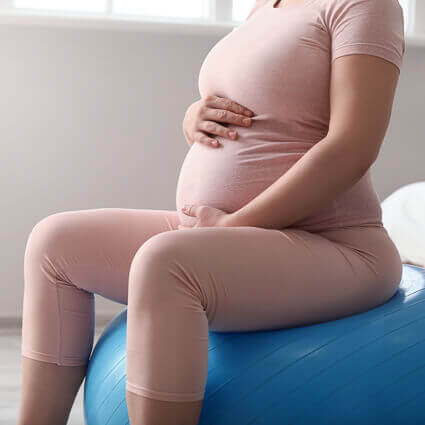
- Sitting on a birth ball
- Hands-and-knees positions
- Side-lying
- Squatting
- Leaning forward over a bed or counter
A handful of comfortable options is usually more useful than one “ideal” birth position you’ve tried to master. Your care team can help you adapt positions around monitoring, pain relief, and medical needs.
Pelvic Mobility and Comfort During Pregnancy
Your pelvis isn’t a completely rigid structure. Hormonal changes during pregnancy affect the ligaments around your joints, and that may change how movement feels.
Gentle activity may help you maintain mobility and make daily tasks more comfortable. The point isn’t to force a particular birth outcome. Walking, prenatal yoga, pelvic tilts, gentle stretching, and birth ball exercises may all be options, depending on your health and pregnancy.
Ask your obstetrician or midwife which activities are suitable for you, especially if you have pelvic pain or activity restrictions. Comfortable movement is the goal, not deeper stretches or greater flexibility.
Making Room for Rest and Relaxation
Preparing for birth isn’t only about muscles and joints.
Your nervous system helps regulate your stress response. Feeling tense or overwhelmed? You might notice tighter muscles, shallower breathing, or trouble settling down to sleep.
Deep breathing, mindfulness, adequate rest, and gentle exercise may help you feel more relaxed. Staying hydrated and spending time outdoors may fit into a comfortable daily routine as well. Some women choose prenatal massage after discussing it with their maternity care team.
You’re not trying to eliminate every discomfort or follow some perfect routine. You’re looking for manageable ways to rest, move, and feel more at ease.
Comfort Can Make Position Changes Easier
Here’s a common misconception: that you need to train your body to hold certain positions.
In reality, a position that helps at one point may feel uncomfortable later. Maybe you’ll prefer walking early on. Leaning forward during a contraction. Resting on your side once you’re tired.
Practicing comfortable positions during pregnancy helps you get familiar with your options. During labor, your maternity team can guide changes based on your preferences and clinical needs. And if you need assistance, or have to stay in one position for medical reasons, that doesn’t mean you prepared poorly.
A Flexible Birth Plan Leaves Room for Change
Birth plans can be helpful. Flexibility matters too.
How labor unfolds depends on your baby’s position, the pace of your labor, your energy level, and medical recommendations. The American College of Obstetricians and Gynecologists encourages changing positions during labor when they allow necessary monitoring and treatment and aren’t medically contraindicated.
So instead of preparing for one specific scenario, build a toolbox of comfortable movement and relaxation options.
It’s also worth discussing your preferences with your obstetrician or midwife ahead of time, including how those options might change if you choose an epidural or need additional monitoring.
Where Prenatal Chiropractic Care May Fit
As your center of gravity shifts, ongoing changes occur in the spine, pelvis, and surrounding muscles.
Some women seek chiropractic care for pregnancy-related back or pelvic discomfort. An assessment can help determine whether care focused on those musculoskeletal symptoms may be appropriate. Research on its effectiveness during pregnancy remains limited, though.
To be clear, chiropractic care doesn’t change the baby’s position. It doesn’t guarantee the position, an easier labor, or a particular birth experience, and it doesn’t replace prenatal care from your obstetrician or midwife.
At Wellness Montana, recommendations are individualized to your stage of pregnancy, symptoms, health history, and comfort level.
Prepare for Birth with Comfort in Mind
“What’s the perfect birth position?” may not be the most useful question. Try these instead:
- Which movements feel comfortable?
- Is pain limiting my daily activities?
- What helps me relax?
- What position changes might be available during labor?
- What should I discuss with my maternity team?
Preparing for birth isn’t about getting it perfect. It’s about knowing your options and leaving room for your needs and circumstances to change.
If back or pelvic discomfort is making pregnancy harder, contact our Bozeman team to discuss whether prenatal chiropractic care may be suitable for you.